แสดงบทความที่มีป้ายกำกับ On-site training course แสดงบทความทั้งหมด

Onsite Training of Trainers on Data Analysis and Extension to Promote Co-management in Viet Nam

Date: 15-17 June 2016
Venue: Da Nang City, Viet Nam

Objectives

1. Support key staff at provincial level and key persons in the co-management communities with the knowledge of utilization data to formulate the fisheries resources management plan and implementation.
2. Introduce the extension strategy and components to promote co-management in Vietnam.  

Result
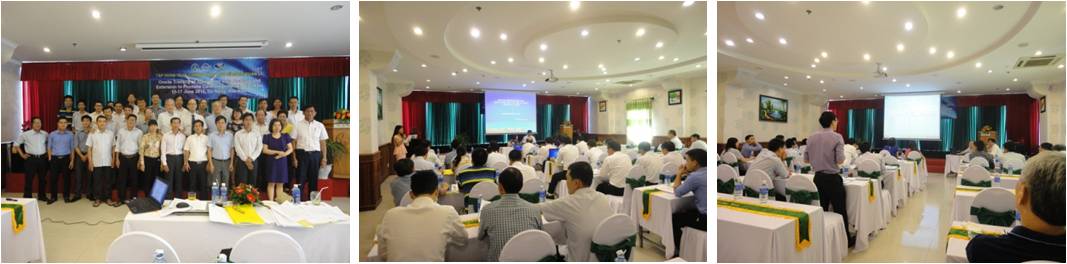
The Training had 3 sessions; session 1. Data collection reporting and analysis, session 2. Utilization collected data for formulation of fisheries resources management plan, and session 3. Practical activity: develop the result to be fisheries management work plan and how to promoted.

The session 1 had five presentations from resource person from Vietnam, Japan (Dr. Tsutom Miyata, the Head of Fisheries Socioeconomics of Japan Fisheries Research and Education Agency, and Mr. Hidenao Watanage) and SEAFDEC (Ms. Thanyalak Suasi, Socioeconomic Scientist). The presentation focus on the overview of data collection in Viet Nam as well as how to collect and analyst the data including reporting the result of data analysis. 

The session 2 composed of five presentations focusing on how to develop the fisheries management plan including the case studies from Japan, Thailand, and the Philippines. It is important to conduct principal/basic survey to get the information for Fisheries Management Plan (FMP). As well as the participation from the fishers is very useful for the data collection and FMP, therefore, it need to encourage and involve the fishers in the process of planning. Moreover, the presentation also clarified more on the supporting from the government which is essential to organize and keep the co-management and CBFM. The government must protect and sustain local fisher's decision and activities for fisheries management by legal framework by giving them the fishery right to protect and sustain CBFM.   

The session 3 was the practical activity: develop the result to be  fisheries management work plan and how to promoted by using law data of Viet Nam. Before start the session, Dr. Yasuhisa Kato, Chief Technical Advisor (CTA) for the Coastal Resource for Sustainable Development Project (CRSD) in Viet Nam, suggested that the officers should understand on the importance of data collection and convince the fishers to collect the data by themselves. Then, Dr. Long kindly presented on the data of Camoa Province. He introduced the CPUE in each month from commune data collected. After that, Dr. Yuttana, who was a chairperson in this session, invited each province to introduce the data and difficulties in order to collect the data. The difficulties were 1) lack of resource person to collect data, 2) the collector have not been trained so they do not collect the data well, 3) fishers use many kind of fishing gears, therefore, it's difficult to identify what each species came from which fishing gear.

After presented all data from the Province, the resources persons kindly gave them the suggestions. The fisheries data should be included the production form illegal fishing gear too even it difficult to get the data. Moreover, if the fishers are very poor, it difficult to change the fishing gear, therefore, the government should support the fishers in order to change the fishing gear. In addition, the participants were very interested on the demarcated community fishing area in Japan. It would very useful, if it can be applied to suit with the Viet Nam condition.

TOT (Training of Trainers) on Facilitating Fisheries Information Gathering through Introduction of Co-management and Community-based Fisheries Management: Effective Implementation and Extension of the Co-management and CBFM in Lao PDR

Date: 27-30 April 2015
Venue: Khammouane Province, Lao PDR

Objectives

1. Create better understanding of fishers and local government authorities on the importance of sustainable fisheries development through co-management for inland fisheries, especially on the leading role in practicing and transferring knowledge on co-management for inland fisheries;
2. To introduce the knowledge and experience on practical approach to Co-Management and Community-based Fisheries Management (CBFM) to local fishing community of Lao PDR.
3. Strengthen practical competence in cooperation and implementing the applicable inland fishery management plans by local fishing community.
4. Provide practical tools and methodology of fisheries data collection in inland small-scale fisheries for better development and management of fisheries resources to ensure sustainable livelihood for fishing communities. 
5. To transfer knowledge on Lao Fisheries law to local officers

Result


The Department of Livestock and Fisheries of Lao PDR requested SEAFDEC for supporting to conduct an on-site training course to promote the concept of community-based fisheries management and co-management to local fishing community in Lao PDR. The participants composed of 30 DLF’s local officers of the Center part of Lao PDR and 4 officers from DLF head quarter as well as six persons from SEAFDEC and one resource person from Department of Fisheries of Thailand.

The presentations had both lecture and workshop. The lecture divided into three sessions. First session was Basic knowledge on co-management and CBFM. In this session had six modules; 1) Community- based fisheries management: importance of fisheries management by community, 2) Important role of resource management for sustainable fisheries, 3) Community-based Fisheries Management in Japan  and its implications for Southeast Asian Countries, 4) How to introduce and facilitate community -based fisheries management (CBFM) to fisheries community5) Concept and effective methodology on data collection through CBFM, and 6) Introduction of Fisheries law of Lao PDR.

Second session was experiences/case studies on practical approach to co-management and CBFM. It composed of five modules; 1) Co-Management/Community-based Fisheries Management in Nam Oon Dam, Sakon Nakhon Province, Thailand (case study), 2) Micro-credit for small-scale fisheries in Thailand (case study), 3) Case study on Community-based Fisheries Management in Nam Houm reservoir, Lao PDR, 4) Importance of socio-economic information to improve fisheries livelihood (case study), 5) Encouraging women’s participation in fisheries management  for sustainable livelihood (case study).


Third session was the workshop on effective implementation and extension of Co-management and CBFM in Provincial level. It composed of; 1) Introduction on workshop’s plan, 2) Finding out issues and challenges on fisheries management in provincial level, 3) Consideration of roles and functions of local officer/government officers in facilitating CBFM, 4) Consideration on the way forward. The participants were divided into 3 groups to discussion on these topics. Then, each group presented on the result and got suggestions and recommendations. Furthermore, the training also included the study trip at Nam Thern 2 to learn about fisheries co-management by cooperation between the Fisheries Management Unit and fisheries officers.

Training on Trainer (TOT) on Facilitating Fisheries Information Gathering through Introduction of Community Based Fisheries Management: Legislative and Institutional Aspects of Rights-based Fisheries Management

Date: 13-15 August 2014
Venue: Da Nang City, Vietnam

Objectives:
1. Support national fisheries staff and provincial staff with the knowledge of Legislative and Institutional Aspects of Rights-based Fisheries Management,

2. Provide legal basic of Rights-based Fisheries Management supporting for revision process of Fisheries Law in Vietnam,

3. Support institutional building of stakeholders for coastal fisheries management,

4. Provide the practical tool and methodology of fisheries data collection and analysis in coastal small-scale fisheries for better development and management of coastal resources to ensure sustainable livelihood for coastal communities,

5. Provide toolkits on Legislative and Institutional Aspects of Rights-based Fisheries Management with practical lesson learnt.

Results

The training was started by presentation of resource person from SEAFDEC and Japan. There were several topic, namely; the concept and advantage of right-based management of coastal fisheries; the case study in Japan, the Legal bases of Fishery Rights in Japan, Conflict Management and Coordinating Systems in Japanese Fisheries Legislation, Concept and Effective Methodology on data Collection, Data Collection through Community Based Fisheries Management, as well as the Case Study on co-management and community based management from Japan, Thailand, and Malaysia.


In addition, Mr. Tuong Phi Lai, resource person from Vietnam, kindly presented on the technique for data collection and to analyze the problem by using problem tree and fishbone diagram. After finished the presentation part, the participant would be divided into 3 groups to discuss on the process to establish rights-based fisheries management in coastal area of Vietnam. Then each group presented on the result from group discussion.

Training on Facilitating Fisheries Information Gathering through Introduction of Community-based Fisheries Management

Date: 14-16 January 2014
Venue: Kuala Lumpur, Malaysia

Objectives:
1. To strengthen knowledge and skill of the participants on the effective fishery information gathering and data collection in coastal small-scale and inland fisheries in Malaysia.
2. To find out idea for solving the difficulties and problems of fishery information gathering and data collection in Malaysia.
3. Able to set up CBFM communities in Malaysia in closed areas e.g. Lakes and rivers.  Resources will be maintained by locals advised by the department.

Conclusion of the training

The training was attended by the representative of fisheries officers, totally 25 persons. The training was started by SEAFDEC's presentations: 1. The importance of resource management for sustainable fisheries, 2. Appropriate Monitoring Control and Surveillance (MCS) need for resource management in conjunction with community based co-management, 3. Community-based fisheries management: Importance of autonomous fisheries management by community, 4. How to introduce and facilitate community-based fisheries management to fisheries community,  5. Rights-based fisheries management and support system (Extension work) by government, 6. Concept and effective Methodology on Data Collection, 7. Data collection through CBFM, 8. Improving management of financial and economic activities including promotion of alternative livelihood in fishing communities, 9. Ecosystem approach to fisheries management, and 10. Case study on Community-based management in Nam Houm Reservoir.

In addition, the training conducted the workshop by divided the participant into 4 groups. The participants have to present a case study in their responsible area on community-based management. Therefore, there were 4 case study area namely, 1) Kampong Tok Jembal, Seberang Takir, Kuala Terengganu, 2) Tanjong Berembang, Pulau Pinang, 3) Selangor, 4) Langkawi. In addition, many areas in Malaysia are apply the community-based management. However, there are still have some problems such as lacking of financial management skills, encroachment of trawlers. The resource persons and participants had exchange the ideas and experiences to overcome these problems and the way forward for appropriate CBFM in Malaysia.

Training course on Facilitating Fisheries Information Gathering Through Introduction of Community-based Fisheries Management

Date: 17-20 June 2013 and 27 October-1 November 2013
Venue: Luang Prabang and Champasack Province, respectively

Objectives:
1. To transfer the knowledge on Lao Fisheries law to local officer and local fishing community.
2. To introduce the knowledge and experience on practical approach to community-based fisheries management and co-management to local fishing community of  Lao PDR.
3. To strengthen practical in competence in cooperation and implementing the applicable inland fishery management plans by local fishing community.
4. Support establishing support officer system towards institutional building of stakeholders for inland fisheries management through capacity building for fisheries extension activities.
5. Provide the practical tool and methodology of fisheries data collection in inland small-scale fisheries for better development and management of fisheries resources to ensure sustainable livelihood for fishing communities.


The Government of Lao PDR promotes on fisheries communities to manage fisheries such as operation on illegal fishing activities by themselves, thus fisheries communities, and institutional as the leader or core person to encourages fishers and farmers through transferring knowledge and activities on sustainable fisheries development and co-management in inland fisheries. In order to promote the concept of community-based fisheries management and co-management to local fishing community, the Department of Livestock and Fisheries of Lao PDR was requested to SEAFDEC for supporting to conduct an on-site training course on facilitating fisheries information gathering through introduction of community-based fisheries management for local fisheries officers of Lao PDR. Therefore, Two training courses were conducted as Lao PDR requested. The first training was conducted in Luang Prabang from 17-20 June 2013. The second training was conducted from 27 October-1 November 2013 in Champasack Province in Lao PDR.

The presentations was the same as on-site training in SEAFDEC's Member Countries. There are both lecture and workshop. The lecture focused on 1) the importance of resource management for sustainable fisheries, 2) Appropriate Monitoring Control and Surveillance, 3) Community-based fisheries management, 4) How to introduce and facilitate community-based fisheries management to fisheries community,  5) Rights-based fisheries management, 6) Concept and effective Methodology on Data Collection, 7) Data collection through CBFM, 8) Improving management of financial and economic activities including promotion of alternative livelihood in fishing communities, 9) Case study on community-based management in Nam Haum reservoir, 10) Establishment of fisher group: under SEAFDEC’s project, 11) Ecosystem approach to fisheries management. Moreover, there are lectures from Laos' side such as introduce Lao fisheries law and Lesson learned on fisheries co-management guideline

In addition, the workshop on "how to organize community-based management in each province through reviewing difficulty and find the way go forward" was conducted by divided the participants into 3 groups. The session 1 of the workshop was to conduct pre survey of community, session 2 was education for Community Fisher, session 3 was organize core person meeting, session 4 was establish community fisheries management organization. The participants were very active to participate the workshop.

In course evaluation, the participants were very appreciated and thank to SEAFDEC and DLF of Lao PDR for organizing the training course. Futhermore, the participants suggessted that the training should be organized again and should be extend more than 5 days. As well as the discusstion session is short, it should have more time to discuss.

On-site Training on Practical Approach to Co-management in Inland and Coastal Fisheries of Cambodia

SEAFDEC organized the training course on Practical Approach to Co-management in Inland Fisheries of Cambodia at Siem Reap Province on 20-23 May 2013, while the training course on Practical Approach to Co-management in Coastal Fisheries of Cambodia at Sihanoukville Province on 23-27 September 2013.


The overall objective of the training course is to protect and manage critical fisheries habitats to ensure sustainable fisheries resource. Related to the above mention, the learning training has the intention for the fisheries officers to understand and get the knowledge of community-based management and rights-based fisheries management including to strengthen practical in competence in planning and implementing the applicable inland fishery management plans. As well as the training course hope the fisheries officers can be  the trainers on organizing the community-based management with knowledge of rights-based fisheries management training course for local fishermen groups.


The training was attended by the representative of fisheries officers from inland and coastal fisheries of Cambodia (such as Preah Sihanouk, Kampot, Koh Kong, Kampong Cham, Kratie, Prey Veng, Kandal, and Takao Province) including the representative officers from Community Fishery Development Department. 
The training was started by SEAFDEC's presentations: 1. The importance of resource management for sustainable fisheries, 2. Appropriate Monitoring Control and Surveillance (MCS) need for resource management in conjunction with community based co-management, 3. Community-based fisheries management: Importance of autonomous fisheries management by community, 4. How to introduce and facilitate community-based fisheries management to fisheries community,  5. Rights-based fisheries management and support system (Extension work) by government, 6. Concept and effective Methodology on Data Collection, 7. Data collection through CBFM, 8. Improving management of financial and economic activities including promotion of alternative livelihood in fishing communities, 9. Ecosystem approach to fisheries management. In addition, Cambodia side also presented on: 1. The Study of the indicator of fishery status, 2. Socio-economic information and Formulating data and information questionnaire for the community, and theory and practices on fisheries law. Furthermore, the participants discussed to develop and improve the sub decree on Community Fisheries (CFi) management and declaration on CFi guideline of Cambodia.
In addition, the fisheries officers who have attended the training of trainers on "Practical Approach to Co-management in Inland Fisheries of Cambodia" had a chance to transfer their knowledge and experiences to the community fisheries in their jurisdiction area. Regarding on this occasion, SEAFDEC with the cooperation of Cambodia organized "Mobile On-site Training Program on Applicable Fisheries Management Approaches for Sustainable Fisheries in Inland Fisheries of Cambodia" which organized on 4-7 June 2013 at Siem Reap Province, Cambodia.

The fisheries officers had a lecture to local fisheries officers of Cambodia. The topics were the same as SEAFDEC and Cambodia presentations. Moreover, the participants had a field study trip on natural resource management and conservation in Kampong Phluk, Siem Reap.

Training course on Facilitating Fisheries Information Gathering Through Introduction of Community-based Fisheries Management

Date: 13-16 May and 1-5 July 2013
Venue: Thanh Hoa province and Can Tho city, respectively

Objectives:
1. Support provinces under WB CRSD project with methodology to promote the applicable practice of community-based co-resource management.
2. Support establishing support officer system towards institutional building of stakeholders for coastal fisheries management through capacity building for fisheries extension activities.
3. Provide the practical tool and methodology of fisheries data collection and analysis in coastal small-scale fisheries for better development and management of coastal resources to ensure sustainable livelihood for coastal communities.
4. Provide toolkits with practical community-based co-resource management and data collection in the coastal communities for further training when developing 140 pilot demonstrations.


In 2012 SEAFDEC supported Vietnam with a very successful training course on  practical approach of community-based co-resource management for 16 officers. However with the number of 140 community-based management pilot sites expected to be established, Training To Trainers (TOT) courses aimed at providing more clear and detailed concept and methodology on community-based resource management, required tools to facilitating on community-based resource management such as tools of data and information collection in coastal fishing communities for better development and management of coastal resources to ensure sustainable livelihood of coastal communities, and skills of establishment and development of community fisheries development organizations are very extremely needed for Vietnam. Therefore, Vietnam proposed SEAFDEC to support Vietnam with 2 on-site training courses in 2013 on "Facilitating Fisheries Information Gathering Through Introduction of Community-based Fisheries Management". The first one was conducted in Thanh Hoa province from 13-16 May 2013 for key provincial staff who are directly involve in co-management implementation and key leaders in selected sites in Northern Provinces including Thanh Hoa, Nghe An an Ha Tinh. The second TOT training course was conducted for key persons Southern Provinces including Soc Trang and Ca Mau with the information from 1-5 July 2013 in Can Tho city of Vietnam. 

The training was started by SEAFDEC's presentations: 1. The importance of resource management for sustainable fisheries, 2. Appropriate Monitoring Control and Surveillance need for resource management in conjunction with community-based fisheries management, 3. Community-based fisheries management: Importance of autonomous fisheries management by community, 4. How to introduce and facilitate community-based fisheries management to fisheries community,  5. Rights-based fisheries management and support system (Extension work) by government, 6. Concept and effective Methodology on Data Collection, 7. Data collection through CBFM, 8. Improving management of financial and economic activities including promotion of alternative livelihood in fishing communities, 9. Ecosystem approach to fisheries management, 10) Case study on community-based management in Nam Haum reservoir.

In addition, the training also conducted the workshop on how to organize community-based management in each province through reviewing difficulty and find the way go forward by divided into 4 session; session 1: Set up team to facilitate CBFM and Conduct pre survey of community, session 2: Education for Community Fisher, session 3: Organize core person meeting, session 4: Establish Community Fisheries Management organization.

In course evaluation, the resources person acknowledged the participants for their knowledge/skill as well as actively participation. The participants were very appreciated and thank to SEAFDEC for organizing this training course. Moreover, the participants also suggessted that it should included the topic on the status of coastal resource condition in Philippines as well as the training course on fiinancial management should be organized for the officers.

The training course on practical approach for enhancing community-based fisheries co-management in inland fisheries of Thailand

Date: 14 - 18 January 2013
Venue: Lamtakong Research Station, Nakhon Ratchasima Province, Thailand

Development Objective:
Community fisheries co-management is practiced widely which is an implication of training course of training for trainer on community fisheries co-management. The trained fisheries are able to convey knowledge and experiences obtained from the course to further disseminate to local community. Hence, local community will participated more in managing fisheries resources in the future.

Immediate Objectives:
1. Fisheries officers have knowledge on the important role of sustainable fisheries resources management, fisheries law, and appropriate Monitoring, Control and Surveillance (MCS).

2. Fisheries officer thoroughly understand the principle of community fisheries resources co-management, rights-based fisheries management, community-based co-management, mobile hatchery, nursery cage/pen and fish release.

3. Fisheries officers aware the importance of socio-economic information and its linkage to fisheries management for the sake of improving livelihood.

Result
The on-site training was conducted by collaboration among SEAFDEC, Department of Fisheries (DOF), Thailand and Japanese Trust Fund (JTF). The Secretary-General of SEAFDEC, Dr. Chumnarn Pongsri, and The Deputy Secretary-General and JTF Manager, Mr. Kenji Matsumoto, kindly delivered a welcome speech to all the participants. As well as, the Deputy Director-General of Fisheries, Mr. Surajit Intarachit, kindly declared the training open. The participants in this training, totally 40 persons, were the fisheries officers who responsible for inland fisheries management.

During 5 days training, the participants were received and learned a lot of the important role of resource management, community-based co-management, Monitoring, Control and Surveillance (MCS), rights-based fisheries including the importance of socio-economic information. Beside, the resource persons from DOF also kindly presented on fisheries law, the case study of Huay Luang reservoir and Songkham river, mobile hatchery and fish releasing technique as well as installation and operation of nursery fish cage and fish pen.

In addition,  The mobile hatchery and fish releasing technique were demonstrated to the participants at the Lamtakong Research Station. Furthermore, the demonstration on fish cage and fish pen nursery were presented to the participants and 40 fishermen at the Lamtakong reservoir. The DOF also gave the fry fish comprised of Silver Barb and Common Carp (totally 100,000 fish) and the private company gave Julian's Golden Prize Crap (2,000 fish) for fish releasing. After finished the training, the participants received the certificate and the fisherman received the souvenir.    

The training course on practical approach to community-based fisheries management in coastal area of Myanmar

Date: 17 - 21 December 2012
Venue: Yangon, Myanmar

Objectives:
1. To introduce the knowledge and experience on practical approach to community-based fisheries management to fisheries officer of Myanmar.
2. To strengthen practical in competence in planning and implementing the applicable coastal fishery management plans.
3. To enhance the HRD of fisheries officer to organize the community-based management with knowledge of community-based and rights-based fisheries management training course for local fishermen group.

Result

With the collaborated between SEAFDEC, Japanese Trust Fund, and Department of Fisheries of Myanmar organized the on-site training course on practical approach to community-based fisheries management in coastal area of Myanmar. The training course aimed to transfer knowledge and experience on community-based and rights-based fisheries management to fishery officers of Myanmar.

The Director-General of Department of Fisheries, Myanmar, Mr. Khin Ko Lay kindly declared the training open and welcomed SEAFDEC and all participants to the training. The training was start by lecturing on the important role of resource management including MCS as well as community-based and rights-based fisheries management for sustainable fisheries. Furthermore, the Deputy Chief of SEAFDEC-Training Department, Mr. Kenji Mutsumoto, kindly presented on the fisheries extension service in Japan. In addition, the community-based management in freshwater reservoir (Nam Houm, Lao PDR) also introduced to the participants as a case study for inland fisheries management.

After that, the participants were divided into four groups (10 persons/group) to make the trial presentation on two topics. The first topic was “important role of resource management for sustainable fisheries management” for group 1 and 2. The second topic was “concept of community-based fisheries management and establishment of community fisheries organization” for group 3 and 4. Each group had 20 minutes to make a presentation by using power point, flip chart or other media.

Regarding to the trial presentation, four groups were present to the training and received the comments and suggestions from the resources person. The presentation still used the technical words so it should changed to easy word for clearly understanding of fishermen in fishing community. However, some groups’ presentation show the picture and clearly explain on the role of resource management and fishers’ group establishment.

On the last session, the Deputy Chief of SEAFDEC-Training Department kindly made a speech to declare the training close.  

The training course on practical approach for enhancing community-based co-management in inland fisheries of Lao PDR


Date: 10 - 14 December 2012
Venue: Vientiane, Lao PDR

Objectives:
 1. To introduce the knowledge and experience on practical approach to community-based co-management to fisheries officer of Lao PDR.
2. To train the trainers on organize the community-based management with knowledge of community-based and rights-based fisheries management training course for local fishermen groups.
3. To strengthen practical in competence in planning and implementing the applicable inland fishery management plans.
4. Gathering of the fishery data and information and understanding the indicators of fishery status, (fish catch, fish price, fishing effort), and socio-economic information.
5. Disseminate information materials, such as brochure and poster, for enhancing awareness and knowledge on sustainable fisheries development.

Result
This was an another on-site training course on community-based co-management in SEAFDEC Member Countries. There were three main sessions for the training.

The first session was lecturing on the importance of resource management for sustainable fisheries including the fisheries management methods, which were comprised of MCS, community-based co-management, rights-based fisheries, and ecosystem approach. Besides, the importance of sustainable livelihoods and the communication skill were transferred to the participants. Moreover, the mobile hatchery and fish releasing technique was a special lecture for Lao PDR, which introduced by the officer from DOF of Thailand.   

The second session was the practice on mobile hatchery and fish releasing technique for Common Silver Barb. The participants and fishery officers of Lao PDR prepared the mobile hatchery demonstration in front of fishing village in Nam Houm reservoir. Furthermore, the participants were trained about the hormone injection and fish artificial insemination method.     


The third, trial presentation on two topics; 1) the importance role of resource management for sustainable fisheries, 2) the concept of community-based management and establishment of fisheries community were assigned to the participants. The participants were divided into four groups and make a group discussion to prepare the power point presentation. After that, the participants (fishery officers) would play the role as fishery extension officer to present to the fishery community. In addition, the resource persons evaluated the trial presentation that the participants made a good presentation and used easy word that suitable for local fishermen. Furthermore, the presentation should show the problems in the fishing community first and then introduced the importance of fisher group establishment. After course evaluation, Dr. Yuttana kindly declared the training close.