แสดงบทความที่มีป้ายกำกับ Coastal small-scale fisheries แสดงบทความทั้งหมด

Onsite Training of Trainers on Data Analysis and Extension to Promote Co-management in Viet Nam

Date: 15-17 June 2016
Venue: Da Nang City, Viet Nam

Objectives

1. Support key staff at provincial level and key persons in the co-management communities with the knowledge of utilization data to formulate the fisheries resources management plan and implementation.
2. Introduce the extension strategy and components to promote co-management in Vietnam.  

Result
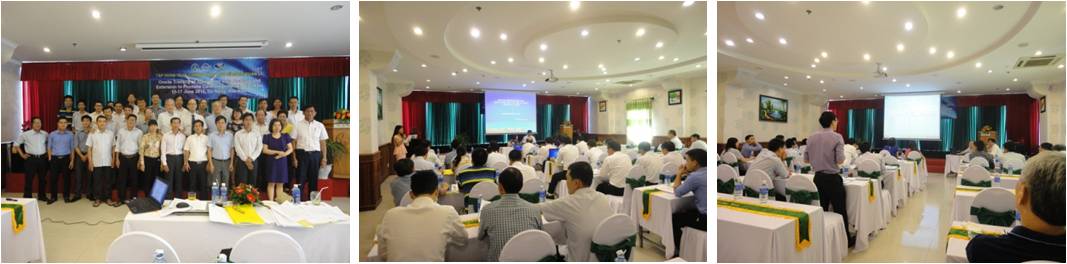
The Training had 3 sessions; session 1. Data collection reporting and analysis, session 2. Utilization collected data for formulation of fisheries resources management plan, and session 3. Practical activity: develop the result to be fisheries management work plan and how to promoted.

The session 1 had five presentations from resource person from Vietnam, Japan (Dr. Tsutom Miyata, the Head of Fisheries Socioeconomics of Japan Fisheries Research and Education Agency, and Mr. Hidenao Watanage) and SEAFDEC (Ms. Thanyalak Suasi, Socioeconomic Scientist). The presentation focus on the overview of data collection in Viet Nam as well as how to collect and analyst the data including reporting the result of data analysis. 

The session 2 composed of five presentations focusing on how to develop the fisheries management plan including the case studies from Japan, Thailand, and the Philippines. It is important to conduct principal/basic survey to get the information for Fisheries Management Plan (FMP). As well as the participation from the fishers is very useful for the data collection and FMP, therefore, it need to encourage and involve the fishers in the process of planning. Moreover, the presentation also clarified more on the supporting from the government which is essential to organize and keep the co-management and CBFM. The government must protect and sustain local fisher's decision and activities for fisheries management by legal framework by giving them the fishery right to protect and sustain CBFM.   

The session 3 was the practical activity: develop the result to be  fisheries management work plan and how to promoted by using law data of Viet Nam. Before start the session, Dr. Yasuhisa Kato, Chief Technical Advisor (CTA) for the Coastal Resource for Sustainable Development Project (CRSD) in Viet Nam, suggested that the officers should understand on the importance of data collection and convince the fishers to collect the data by themselves. Then, Dr. Long kindly presented on the data of Camoa Province. He introduced the CPUE in each month from commune data collected. After that, Dr. Yuttana, who was a chairperson in this session, invited each province to introduce the data and difficulties in order to collect the data. The difficulties were 1) lack of resource person to collect data, 2) the collector have not been trained so they do not collect the data well, 3) fishers use many kind of fishing gears, therefore, it's difficult to identify what each species came from which fishing gear.

After presented all data from the Province, the resources persons kindly gave them the suggestions. The fisheries data should be included the production form illegal fishing gear too even it difficult to get the data. Moreover, if the fishers are very poor, it difficult to change the fishing gear, therefore, the government should support the fishers in order to change the fishing gear. In addition, the participants were very interested on the demarcated community fishing area in Japan. It would very useful, if it can be applied to suit with the Viet Nam condition.

Report Trip for Social Survey in Rayong Province

Date: 1-4 September 2015
Venue: Rayong Province, Thailand

Objectives

1. To collect the additional data in order to develop the academic paper for complete RIHN project.
2. To identify the coastal area of Rayong Province, the situation of 3 zone; industry zone, tourism zone and natural zone (mangrove area).
3. To discuss with Department of Marine and Coastal Resources (DMCR) on the conservation activitysupport to Fisher Groups

Result
1. Discussion with Muang District Fisheries Officer

Social team visit Muang District Fisheries office to discuss with Ms. Pairat Jearat, Muang District Fisheries Officer on the situation of Rayong Coastal zone as result of the survey show that the fishing income and catch price differ in each zone. She explained that the fishers in Industrial zone are active fishing compare with the other zones.In addition, the factory of Industrial zone have policy to support the communities in order to conserve and rehabilitate fisheries resources as well as the fisher livelihood by provide fund to the fisher groups for operating group activities such as crab bank, microcredit, fish processing product and releasing fingerling. The factories also give priority for job opportunity to the fisher’s children. After discussion, she accompanies our team to visit Kao Yod Fisher Group to observe Crab Bank activity.

2. Visit Crab Bank at Kao Yod Fisher Group

Crab Bank was established in March 2015 which funding support from Department of Fisheries andMap Ta Phut Industrial Port. There are 30 fishers involve in crab bank activity and they have donated crab with eggs to crab bank around 20-50 crabs per day, the crab will put into tank and waiting for its releasing eggs around two days, then release crab eggs into the sea at night time 8 p.m. The group will sell crab to the middleman and the income will keep for group administration such as electricity bill and water supply etc. besides the group also collect some eggs squid from the fishers waiting for hatching and release it to the Sea. The Fishers think that the crab bank activity could help them to enhance the swimming crab resources due to they can catch more swimming crab after 2 month starting this activity.

3. Discussion on Survey plan

The social team agree and confirm on the categories coastal zone of Rayong into three zone; industry zone, tourism zone and natural zone (mangrove area) that would analyst the result by zone. However, we will collect more information on the trend of catch, trend of catch price, trend of catch size from 5-10 years ago, No. of fishing gear used per trip and source of additional income during low season. The planning decide to collect the data by sample 3 fishers in each fisher group. We plan to discuss with the DMCR of Rayong Province on the support program to the fisher group in term of enhancement and rehabilitate fisheries resources.

4. Discuss with DMCR

The social team visited the Coastal and Marine Resources Research Center of DMCR at Pak Nam Prasae, Klang district and met Ms. Chalatip Junchompoo, Marine Biologist, she explained that the main function of this office is the research work focusing on water quality, conservation and rehabilitation of coral reefs, sea grass, sea turtle and endangered species. Moreover, recently this research center implement the project on Monitor the water quality in Prasae River through promoting community participation to evaluate and improve water quality by using E.M. (Effective Micro-organisms). Then, we visited the Coastal and Marine Resources Conservation Center of DMCR at Phe Sub-district, Muang District where emphasize on conservation and enhancement the resources, the main activities are mangrove plantation, Installation of Artificial reefs, Enforcement, Promoting Fish Enhancing Device and Fish house.

5. Collect additional data from the fishers  

The social team collect the additional data from the fishermen of 13 fisher group namely: Ao Makham Pom, Nern Kho, Rua Rop Luang Prasae, Municipal Klang, Khok Laem Tien, Klong Ka Cher, Laem Rung Ruang,Kon Puk, Ban Kao Yod,  Pakklong Takuan, Takuan Ao Praduu, Nong Fab and Payoon Fishers group, The main information focus on catch, size, trend of price, fishing gear used and additional income during low season. The total number of fisher respondents is 35 fishers and the results of this survey conclude as follow:
1.    There are 31 fishermen agree that the fisheries resources are decreased from last 5-10 years.
2.    For the price trend, 25 fishermen think that the price of catch is increasing however, 7 fishermen said that the price of catch are not change from the past and 3 fisher think the price is decreasing.
3.    Twenty four fishermen explain that the number of fishermen is increased, 6 of them said that it is not change of the fishermen engagement in fisheries.
4.    The main fishing gear of 25 fishermen is crab gill net follow by fish gill net and squid jigging.
5.    The average number of Crab gill net that the fishermen use 6 set which combine of 4-6 net and the length of net is around 100 meter/net.
6.    Most fishermen use fishing boat with length 6-7 meters.
7.    Most fishermen engage in crab gill net that they operate fishing whole year during monsoon season if they cannot go for fishing because of the strong wind, the fishermen will repair fishing boat and preparing fishing gear. Some fishermen use fishing gear more than one type and they will change fishing gear for appropriate season. There are 3 fishermen culturing green mussel.
8.    The main fisheries activities that fishermen involved are installation of Fish Aggregate Devices and Artificial reefs, Release fish fingerling, Crab Bank, Mangrove plantation and zoning.
9.    PTT Public Company Limited gave compensation to fishermen 30,000 baht after oil spill in the sea near Samed Island. Some factory support fish house to fisher group.
10.                        The sea food price in the area is depend on the middlemen setting price that related to market price with refer to demand and supply of sea food.

11.                        Fifteen fishermen think that the size of target species was smaller than the past and 12 fishermen said that the target size is not change.


Training course on Practical Approach to Community-based Fisheries Management in Coastal Areas of Philippines

Date: 15-19 July 2013
Venue: Quezon Province, Philippines

Objectives:
1. To introduce the knowledge and experience on practical approach to community-based fisheries management to fisheries/field officers of Philippines,
2. To strengthen practical competence in planning and implementing the applicable coastal fishery management plans,
3. To enhance the HRD of fisheries officers to organized the community-based management with knowledge of community-based and rights-based fisheries management training course for local fishermen group.


SEAFDEC continue promote the community-based fisheries management in SEAFDEC's Member Countries. The Bureau of Fisheries and Aquatic Resources, Philippines also requested SEAFDEC to conduct an on-site training course on Practical Approach to Community-based Fisheries Management in Coastal Areas of Philippines particularly the coastal towns of Quezon Province bordering Tayabas Bay.
 
The training was attended by the representative from 1) Provincial Fisheries Officer of Quezon Province, 2) BFAR RFO IV - A Planning/Production/FRMD Officers, 3) BFAR Central Office Staff Coordinator/FRMD/Legal. The training was started by introduction of the status of community-based fisheries management of Region IV-A which was introduced by RD Esmeralda Manalang. After that, SEAFDEC staff gave an presentations on: 1. The importance of resource management for sustainable fisheries, 2. Appropriate Monitoring Control and Surveillance need for resource management in conjunction with community-based fisheries management, 3. Community-based fisheries management: Importance of autonomous fisheries management by community, 4. How to introduce and facilitate community-based fisheries management to fisheries community, 5. Rights-based fisheries management and support system (Extension work) by government, 6. Importance of fisheries data collection Information for sustainable fisheries management and concept and effective methodology on data collection, 7. Improving management of financial and economic activities including promotion of alternative livelihood in fishing communities, 8. Ecosystem approach to fisheries management.

After lecturing, The workshop on how to organize community-based management was conducted by divided into 3 session; session 1: Problems on the resource management through the application of the MCS of the Fisher Folk Association, session 2: Financial problems of the Association, session 3: Problems on the operation/implementation/functioning of Association and other matters that need to be strengthen.

In course evaluation, the resources person acknowledged the participants for their knowledge/skill as well as actively participation. The participants were very appreciated and thank to SEAFDEC for organizing this training course. Moreover, the participants also suggesstion that it should be include the topic on the status of coastal resource condition in Philippines as well as the training course on fiinancial management should be organized for the officers.

Report Trip for fisheries household survey at Prachuap Kiri Khan Province

Date: 24-28 June 2013

Objectives
1. To discuss and get more information on situation of coastal small-scale fisheries
2. To study on fisher group establishment and fisheries management activity
3. To interview fisheries household at coastal small-scale fisheries
4. To pre-test fish distribution questionnaire by middleman

Results
 25 June 2013
SEAFDEC team discussed with CMDEC’s team on number of samples and survey plan of this trip. In the morning, social team visited Baan Pakklong Bang Sapannoi village to collect 11 samples, as well as discuss with fishers on group establishment and fisheries management. The main fishing gear of this group is anchovy castnet and squid trap, and main species are anchovy and soft cuttlefish. In the afternoon, we collected data at Baan Fung Dang village. The main fishing gear is bottom gill net, and the main specie is blue swimming crab. After that, we moved to Baan Chai Tale. The main fishing gear is anchovy castnet, and the main specie is anchovy.

26 June 2013
In the morning, social team divided into two teams, the first team collected data at Baan Pakklong Bang Sapannoi fishers group with 5 samples, and one middleman of soft cuttlefish. The second team collected data at Baan Fung Dang fishers group with 7 samples. In the afternoon, social team went to Baan Chai Tale fishers group to collect the data with 6 samples, and interview one company, which buy soft cuttlefish and dry anchovy in Baan Pakklong Bang Sapannoi village.

27 June 2013
In the morning, SEAFDEC team visited Baan Nong Samed fishers group to observe middleman for interviewing, the main specie is blue swimming crab and shrimp. We interviewed one middleman and one collector at. SEAFDEC team visited and interview one company, which buy dry anchovy in Baan Pakklong Bang Sapannoi and Baan Chai Tale village.

Summary
The total sample of this trip is 37 samples, from three fishers groups namely, Baan Pakklong Bang Sapannoi, Baan Fung Dang and Baan Chai Tale. From two surveys in 2013, we have finished 72 samples collected of Bang Sapannoi District.

In addition, Baan Pakklong Bang Sapnnoi fishers group, which is a big group, has members around 100 members. There are a lot of fishing gears in this group such as anchovy purse seine, anchovy castnet, bottom gill net, shrimp trammel net, squid trap and driving of sea urchin and clam. Now, this group has conflict among fishing gear, some small-scale fishermen complained anchovy castnet, because this fishing gear catch a lot of small fish such as small mackerel. According to this conflict, fishermen in this area have formed a new fishers group namely “Underwater resources (coral reef) conservation group of Baan Pakklong Bang Ssapannoi village” in 2011. There are 80 members, which compose of fishermen and owner of tourist boat. The objectives of this group are protecting coral reef and collection garbage underwater and beach.

For fish distribution, two middlemen and two companies were interviewed in this trip, one middleman buy soft cuttlefish, and another one middleman buy shrimp, blue swimming crab, squid and fish. One company buy soft cuttlefish and dry anchovy, and another one company buy only dry anchovy. At Baan Pakklong Bang Sapannoi village, middlemen have four fishermen. The middlemen sell to tourist and cold storage. The cold storage would buy soft cuttlefish 50-1000 kg per day from 3 big collectors and 2 small collectors. Soft cuttlefish frozen will be sent to main cold storage at Rayong Province, which export to Taiwan. In case of dry anchovy production, the cold storage company will buy from fishermen directly. The main market of this company is Malaysia.

For the structure of middleman at Baan Nong Samed fishers group, the middleman purchase products from two fishers groups namely, Baan Nong Samed and Baan Pakklong Bang Sapannoi village. Baan Nong Samed has one collector, who collected products from 30 fishermen and send to middleman. The middleman will sent all product to Talay-Thai Fish Market, Samut Sakorn day by day.

The training course on practical approach to community-based fisheries management in coastal area of Myanmar

Date: 17 - 21 December 2012
Venue: Yangon, Myanmar

Objectives:
1. To introduce the knowledge and experience on practical approach to community-based fisheries management to fisheries officer of Myanmar.
2. To strengthen practical in competence in planning and implementing the applicable coastal fishery management plans.
3. To enhance the HRD of fisheries officer to organize the community-based management with knowledge of community-based and rights-based fisheries management training course for local fishermen group.

Result

With the collaborated between SEAFDEC, Japanese Trust Fund, and Department of Fisheries of Myanmar organized the on-site training course on practical approach to community-based fisheries management in coastal area of Myanmar. The training course aimed to transfer knowledge and experience on community-based and rights-based fisheries management to fishery officers of Myanmar.

The Director-General of Department of Fisheries, Myanmar, Mr. Khin Ko Lay kindly declared the training open and welcomed SEAFDEC and all participants to the training. The training was start by lecturing on the important role of resource management including MCS as well as community-based and rights-based fisheries management for sustainable fisheries. Furthermore, the Deputy Chief of SEAFDEC-Training Department, Mr. Kenji Mutsumoto, kindly presented on the fisheries extension service in Japan. In addition, the community-based management in freshwater reservoir (Nam Houm, Lao PDR) also introduced to the participants as a case study for inland fisheries management.

After that, the participants were divided into four groups (10 persons/group) to make the trial presentation on two topics. The first topic was “important role of resource management for sustainable fisheries management” for group 1 and 2. The second topic was “concept of community-based fisheries management and establishment of community fisheries organization” for group 3 and 4. Each group had 20 minutes to make a presentation by using power point, flip chart or other media.

Regarding to the trial presentation, four groups were present to the training and received the comments and suggestions from the resources person. The presentation still used the technical words so it should changed to easy word for clearly understanding of fishermen in fishing community. However, some groups’ presentation show the picture and clearly explain on the role of resource management and fishers’ group establishment.

On the last session, the Deputy Chief of SEAFDEC-Training Department kindly made a speech to declare the training close.