แสดงบทความที่มีป้ายกำกับ Japanese Trust Fund แสดงบทความทั้งหมด

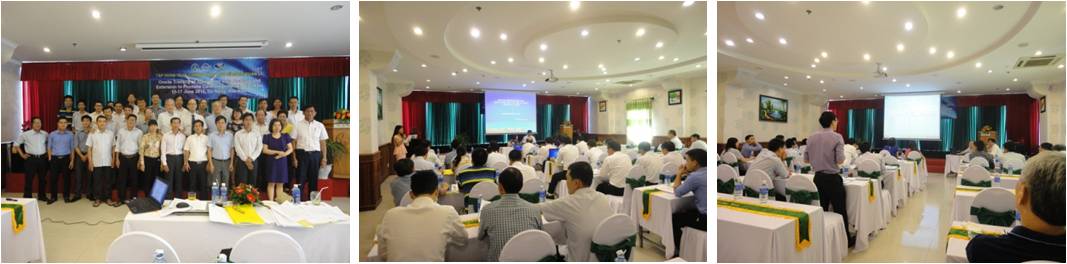
Onsite Training of Trainers on Data Analysis and Extension to Promote Co-management in Viet Nam

Date: 15-17 June 2016
Venue: Da Nang City, Viet Nam

Objectives

1. Support key staff at provincial level and key persons in the co-management communities with the knowledge of utilization data to formulate the fisheries resources management plan and implementation.
2. Introduce the extension strategy and components to promote co-management in Vietnam.  

Result

The Training had 3 sessions; session 1. Data collection reporting and analysis, session 2. Utilization collected data for formulation of fisheries resources management plan, and session 3. Practical activity: develop the result to be fisheries management work plan and how to promoted.

The session 1 had five presentations from resource person from Vietnam, Japan (Dr. Tsutom Miyata, the Head of Fisheries Socioeconomics of Japan Fisheries Research and Education Agency, and Mr. Hidenao Watanage) and SEAFDEC (Ms. Thanyalak Suasi, Socioeconomic Scientist). The presentation focus on the overview of data collection in Viet Nam as well as how to collect and analyst the data including reporting the result of data analysis. 

The session 2 composed of five presentations focusing on how to develop the fisheries management plan including the case studies from Japan, Thailand, and the Philippines. It is important to conduct principal/basic survey to get the information for Fisheries Management Plan (FMP). As well as the participation from the fishers is very useful for the data collection and FMP, therefore, it need to encourage and involve the fishers in the process of planning. Moreover, the presentation also clarified more on the supporting from the government which is essential to organize and keep the co-management and CBFM. The government must protect and sustain local fisher's decision and activities for fisheries management by legal framework by giving them the fishery right to protect and sustain CBFM.   

The session 3 was the practical activity: develop the result to be  fisheries management work plan and how to promoted by using law data of Viet Nam. Before start the session, Dr. Yasuhisa Kato, Chief Technical Advisor (CTA) for the Coastal Resource for Sustainable Development Project (CRSD) in Viet Nam, suggested that the officers should understand on the importance of data collection and convince the fishers to collect the data by themselves. Then, Dr. Long kindly presented on the data of Camoa Province. He introduced the CPUE in each month from commune data collected. After that, Dr. Yuttana, who was a chairperson in this session, invited each province to introduce the data and difficulties in order to collect the data. The difficulties were 1) lack of resource person to collect data, 2) the collector have not been trained so they do not collect the data well, 3) fishers use many kind of fishing gears, therefore, it's difficult to identify what each species came from which fishing gear.

After presented all data from the Province, the resources persons kindly gave them the suggestions. The fisheries data should be included the production form illegal fishing gear too even it difficult to get the data. Moreover, if the fishers are very poor, it difficult to change the fishing gear, therefore, the government should support the fishers in order to change the fishing gear. In addition, the participants were very interested on the demarcated community fishing area in Japan. It would very useful, if it can be applied to suit with the Viet Nam condition.

Report trip to Monitor and Evaluate Co-management in Nam Oon Dam

Date: 15-19 May 2016
Venue: Sakon Nakhon Province, Thailand

Objectives
1. To install the buoy for conservation zone.
2. To survey fish species by using long line fishing gear.
3. To attend the traditional ceremony on destined fish with the local community.
4. To produce the video documentation on Co-management activities in the local community.

Results

1. Discussion on work plan with DOF officer

SEAFDEC team and DOF staff of Fisheries Management unit of Nam Oon Dam were meeting at Nam Oon Dam Fishery Management Unit. We discuss on the work plan that would be conducted within 3 days.

The first activity was install the buoy which provide by SEAFDEC/TD to demarcated conservation zone (area 643 Rai) which located between 2 communities: Ban Dong Kam Pho and Ban Nachuak for dividing the responsibility of 2 communities in order to conserve the area. The position of sign buoy was discussed and defined follow the official document that was announced the conservation area by local organization with agreement from communities. SEAFDEC/TD prepared 15 sign buoys which was made of the container size 100 liters putting cement inside cover with white color (easy for observe in the night time). The buoy was fixed in the water by using cement block size 40x30x25 cm. and approximate weight around 50 kg. The conservation zone was indicated by 7 buoys in each side and one buoy was installed to separate responsibility area of two communities

The second activity was conduct the trial Long line fishing gear for fish species in difference water depth with two type of long line: vertical and horizontal. Three types of bait were used, namely, tilapia fingerling, tadpole and earthworm which would prepared by Nam Oon Fisheries Management Unit. the long lines were set in the fishing ground which suggested by fishers and  would be harvested on the next day early morning. The total catch was three Bagrid catfish.

The third activity was organize the local meeting at Ban Thai Chareon to present the fishing ground mapping and fish calendar. The data on fish species and fishing ground were collected from fishing logbook which recorded by fisher themselves. Ms. Jariya Sornkliang presented on the fish species and fishing ground from the logbook recorded by fisher volunteers. She also asked the fishers to clarify the local name of fish species.

The forth activity was attend the traditional ceremony of destined fish and fish releasing at Ban Thai Chareon village. The traditional ceremony on fish destined is taking a merit to the fisheries resources because the local people believe that they utilize fisheries resources for living whole year and they would like to build awareness on fisheries resource conservation. This ceremony was organized by the villagers themselves of Ban Thai Chareon and Ban Huay Lek Fai community with financial supported from local organization. In addition, the head of Nikom Nam Oon District kindly gave the opening remark. Then, 500,000 Silver barb and 70 Mekong giant catfish were released. These fish released were supported by Department of Fisheries. SEAFDEC media team took a short video during the meeting, and also make a stock shot on Co-management activity/ traditional ceremony of destined fish for SEAFDEC’s VDO production.

In addition, SEAFDEC/TD produced three permanent sign boards and 20 Vinyls for announcement of fisheries management measure, and gave to Nam Oon Fisheries Management Unit for setting at the fishing communities. SEAFDEC also provided Polo shirts to the fisher volunteers who record fish catch data in the fishing logbook.

Report on Follow-up Activities in implementing/promoting Community-based Fisheries Management and Co-management in Nam Oon Dam

Date: 16-20 November 2015
Venue: Sakon Nakhon Province, Thailand

Objectives

1. Monitoring catch data from logbook with 16 fisheries communities around Nam Oon Dam, which collected catch data with 2 period, 1) 1 March – 15 April 2015, 2) 15 August – 31 December 2015; and
2. Monitoring community’s measurement on closing season from rule signboard, which contain the close season period, the allowed date for fishing during closing season, prohibited fishing gear and conservation zone; and
3. Monitoring fish catch by logbook with middleman.

Result

SEAFDEC/TD, DOF from Head Quarter and Local Fisheries Officers of Nam Oon Dam Unit organized the meeting. There were two main objectives; 1) To inform the meeting on the work plan and information, and 2) To make understand with local fisheries officers on attitude questionnaire. 
The meeting was organized with 16 fisheries communities by divided into 4 points (4 communities per one point). The meeting was hold at night time (1800-2000) because most of fishermen have to go for rice field harvesting in daytime. At the meeting, there were two main information; new Thai fisheries laws and establish fisheries community to be organization.
In the evening of each day, we organized the meeting with fishermen at point 1, 2, 3, and 4. Point 1: Baan Kong Paklouy, Baan Dong Kam Pho, Baan NongBau, and Baan Na Chuak. Point 2: Baan Na Lao, Baan Nha Than, Baan Hoy Bun and Baan NongPhu. Point 3: Baan Kok Sung, Baan Klang, Baan KokManow, and Baan NongPhugtiem. Point 4: Baan KudTakap, Baan Thai Charoen, Baan Na Kum, and Baan NongPling.     
Mr. Surachai, Head of Nam Oon Dam Fisheries Management Unit, introduced SEAFDEC and DOF team, and explained the objectives of this meeting, including inform on new Thai fisheries laws, and advantage from fisheries community registration, and the objective of attitude questionnaire. Then let the fisherman filled the questionnaire.
Moreover, we visited landing site at Baan Dong Kum Pho. There were 4 main middlemen in this community. His fishing gear was gill net but there were many mesh size. The main species was Tilapia, goby. At 0300 a.m., SEAFDEC and DOF went to Nam Ooon Dam to observe fishing operation at Nam Oon Dum. We met fishermen, who fishing by gill net and hook & line at fishing ground.
In addition, we got 32 logbooks from 16 fisheries communities. These logbooks started to record catch data from 16 August to mid of November 2015, and logbooks will be continued to recorded until 31 December 2015.


The objective of attitude questionnaire will be evaluated regulation for measurement in Nam Oon Dam, which starting from 16 April to 15 August 2015.  The total of attitude questionnaire was 87.


Report on Monitoring and Facilitating Fisheries Information Gathering Through Introduction of Community-based Fisheries Management

Date: 3-7 August 2015
Venue: Sakon Nakhon Province, Thailand

Objectives

1.   To present the result of catch data from logbook to each community, which collected catch data by 78 fishermen from 1 March to 15 April 2015; and 
2.   Monitoring community’s measurement on closing season from rule signboard, which contain the closing season period, the allowed date for fishing during close season, prohibited fishing gear and conservation zone; and
3.   Continue on collecting fish catch at before and after closing season (16 April-15 August) by logbook with middleman and fishermen around Nam Oon Dam.

Result

II. Meeting with DOF
SEAFDEC team and DOF’s staffs from head quarter and Fisheries Management unit of Nam Oon Dam discussed at Nam Oon Dam Fishery Management Unit on the plan of this trip. The meeting discuss on the work plan to conduct the community meeting in 16 communities by divide into 4 points and each point compose of 4 communities as follow:
Point No. 1: Ban Na lao, Ban Huay Bun, Ban Nong Phua and Ban Na Tun
Point No. 2: Ban Klang, Ban Khok Sung, Ban Nong Pak Tiem and Ban Khok Manow
Point No. 3: Ban Kud Takap, Ban Nong Pling, Ban Na Kham and Ban Thai Chareon
Point No. 4: Ban Na Chuak, Ban Dong Kham Pho, Ban Nong Bua and Ban Khong Pakuay

The closing season of Nam Oon Dam start in 16 April until 15 August of year. Before closing season, SEAFDEC provide catching logbook to fisher representatives to record their catch from 1 March to 15 April, totally 45 days. The data from logbook will useful to monitor the quantity of fish in Nam Oon Dam. Therefore, in the community meeting, SEAFDEC presented on the result of catch data which recorded by the fisher representatives using logbook. Moreover, the representatives of each community will continue to record their catch into the logbook after closing season (start from 16 August and also provide them catching logbook, pen and T-shirt). We also clarified the fish catch species of Nam Oon fishing ground that fishers record in difference local name and prepare picture of fish to identify fish species. The Nam Oon Fisheries Management Unit presented on the hatchery and breeding activities and encourage fisher in the Community to enhance the fisheries resources.

Community Meeting at Point No. 1
The total number of fishers in Point No. 1  was 160 fishers divided into 4 communities , namely, Ban Na lao, Ban Huay Bun, Ban Nong Phua and Ban Na Tun (30, 30, 40 and 60 fishers respectively). The meeting was organized at Ban Na Tun community attending by 51 fisher representatives from 4 Communities. Ms. Sumitra Ruangsivakul presented on the result of catch data from catching logbook.

There are 20 volunteers to record catch data. The result showed that most fishers used gillnet for fishing (78%). The main catch species were Common silver barb, Jullien’s mud carp and Spotted featherback. The total catch was 4,634 Kg. The fishers (78%) sold their catch in the village, and 22% of fisher sold to the middlemen. Total catch value was 188,335.50 Baht. For fish utilization, they sold fresh product and they used for fish processing 14%, and for household consumption about 10%. 

In this Point, we got 2 volunteers in each community to continue record their fish catch. After that, Mr. Surachai Sermsuk, Head of Nam Oon Fisheries Management Unit presented the activities on fish breeding which conducted at hatchery of Nam Oon Fisheries Management Unit. Moreover, he mentioned that he will transfer knowledge on fish breeding to the fishers who interested in fish culture as well as he asked fishers to bring fish breeder to him for breeding and increase fish stock. 

Community Meeting at Point No. 2
The Communities of Point No. 2 consisted of Ban Klang, Ban Khok Sung, Ban Nong Pak Tiem and Ban Khok Manow. The Community Meeting of Point No. 2 was hold in Ban Khok Manow Community. There were 16 fishers participated in this meeting. The catch data was recorded by 20 representatives. Ms. Sumitra Ruangsivakul presented the result of data collection, that gillnet is the most fishing gear which fishers favor use for fishing 72% followed by trap 14%. The main catch species were Jullien’s mud carp 879.5 kg, Common silver barb 498.5 kg, and Blanc’s stripped featherback 296.4 kg. The total catch of 20 representatives was 2,636.4 kg.

For fish distribution, the fishers sold their catch to the middlemen inside the village 42%, and 20% of fishers sold their fish by themselves in the village. They sold to the middlemen outside the village and sold at the market with 19% respectively. Total catch value was 99,973 Baht. For fish utilization, Only 10% of fish that they use for consumption in their family. 77% of catch were  sold in fresh product, and 13% for fish processing for selling and consumption.

In this Point, two fishers in each community would be the representatives to record their catch data into the logbook providing by SEAFDEC. 

Community Meeting at Point No. 3
This Point also composed of 4 villages, namely, Ban Thai Charoen, Ban Kud Takap, Ban Na Kum, and Ban Nong Pling. There were 34 fishers came for meeting. The meeting started with introduction of the background and objectives of the meeting, and then SEAFDEC presented the result of data analysis from logbook that collected by 16 fishers in these 4 villages. The result showed that the area for fishing grounds of these villages were Ban Kud Takap and Ban Na Lao. Main fishing gears were Net (51.8%), Hook and line (26.6%) and Trap (15.6%).

For fish selling, most of them (48.3%) sold fish to middleman. 28.5% of fishers sold in village while 23.3% sold at the local market. The fishers in Point No.3 could collect 13 fish species. Most fish species caught are Spotted featherback (672.1 kg.), Grey featherback (353.6 kg.), and Lipped barb (337 kg.). For fish utilization, fish processing was 3%, household consumption 9%, and fresh selling 88%. Total catch in this Point was 1,992.2 Kg. The total real fishers in 4 villages was 22 fishers. The total income of these 4 villages was 113,428 Baht.

In addition, Point No. 3 have 8 volunteers (2 volunteers for each village). The meeting distributed the logbook, T-shirt and pen for each volunteer.

Community Meeting at Point No. 4
There were 4 villages, namely, Ban Nong Bua, Ban Na Chuak, Ban Dong Kum Pho, and Ban Kong Paklouy. In the meeting had 26 fishers.  Mr. Surachai  Sermsuk  introduced the purpose of this meeting. Then, the result from logbook that collected by 22 fishers in this Point was shown to the meeting.

The result showed that the area for fishing grounds of these villages were Ban Na Chuak, Ban Kong Paklouy and Ban Nong Bua. Main fishing gears were Net (84.26%), Hook and line (10.32%) and Hook (3.05%). For fish selling, most of them (72.16%) sold fish in the village while sold to middleman 27.72% and sold in the market 0.12%.

The fishers could collect 17 fish species. Most fish species caught were Common silver barb (2,015.3 kg.), Spotted featherback (811.8 kg.), and Lipped barb (675.5 kg.). For fish utilization, fish processing was 4%, household consumption 9%, and fresh selling 87%. Total catch in this Point was 6,025.2 Kg. The total income of these 4 villages was 237,625.5 Baht. In this Point have 6 volunteers to continue collect the data.

Discussion on future work plan

After finished meeting with Point No.4, SEAFDEC and DOF had a meeting to conclude the activities of this trip, as well as discussion on the next step for Nam Oon Fisheries Co-management. In order to promote the fisheries co-management, the fisheries officers from DOF still need to promote and inform the people by using community wire broadcasting. They plan to make the brochure/CD and distribute to 16 communities around Nam Oon Dam and also village outsiders. Furthermore, SEAFDEC will print more logbook and give to each volunteer for data recording during 16 August till the end of this year. 

Regional Inception Workshop for JTF-6 Program on the Promotion of Sustainable Fisheries Resources Enhancement Measures in Critical Habitats/Fishing Grounds in Southeast Asia

Date: 31 July 2015
Venue: Pattaya, Chonburi, Thailand

Objectives

1. To share the updated information and experiences on the Sustainable Fisheries Resources Enhancement Measures in Critical Habitats/Fishing Grounds in Southeast Asia,
2. To identify appropriate and effective resources enhancement project site, tools, measures and rehabilitation plan for various critical habitats/fishing grounds,
3. To strengthen the collaboration and cooperation among SEAFDEC member countries on promotion of sustainable fisheries resources enhancement in Southeast Asia.

Conclusion

The Regional Inception Workshop for JTF-6 Program on the Promotion of Sustainable Fisheries Resources Enhancement Measures in Critical Habitats/Fishing Grounds in Southeast Asia was organized by the SEAFDEC Training Department on 31 July 2015 in Pattaya, Thailand. Funded by the Japanese Trust Fund, the Workshop was attended by representatives from Cambodia, Indonesia, Lao PDR, Malaysia, Myanmar, Philippines, Singapore, Thailand, and Viet Nam. The SEAFDEC Secretary-General, Deputy Secretary-General, senior officials and staff of the SEAFDEC Secretariat, Training Department (TD), Marine Fishery Resources Development and Management Department (MFRDMD), the Inland Fishery Resources Development and Management Department (IFRDMD), and Members of the Regional Fisheries Policy Network (RFPN) also attended the Workshop.

The Workshop was review of the activities on rehabilitation of fisheries resources and habitat/fishing grounds for resources enhancement. The outputs of the activities undertaken during the implementation of the preceding JTF-5 Project on the “Promotion of Sustainable Fisheries Resources Enhancement Measures in Critical Habitats/Fishing Grounds in Southeast Asia” implemented from 2010 to 2014 were summarized. Three activities had been carried out under this project. These are: (1) Environmental Survey Studies on Artificial Reefs in Rayong Province, Thailand; (2) Resources Conservation and Enhancement in Nam Houm Reservoir, Lao PDR; and (3) Habitat Conservation and Resources Enhancement in Seagrass Beds in Sriboya Island, Krabi Province, Thailand. Furthermore, the lessons learned (successes and failures) from the JTF-5 Project as well as relevant experiences of the Member Countries presented during the SEAFDEC Symposium on Strategy for Fisheries Resources Enhancement in the Southeast Asian Region convened on 27-30 July 2015 also in Pattaya, Thailand should be taken into consideration in planning the enhanced activities of the new JTF-6 Project.

In addition, the Workshop was identified of the appropriate and effective resources enhancement project sites, tools, measures and rehabilitation plan for various critical habitats/fishing grounds. The input provided by SEAFDEC Member Countries. For example, the need for the Project to identify and develop the most suitable tool for effective resources enhancement and rehabilitation based on specific models proven to be successful elsewhere in the region. Moreover, the fisheries refugia is a crucial activity that should be undertaken in order to identify the spawning season of all important species. Furthermore, the Workshop got a value recommendations from the participants such as
- Compilation of information and development of database that could be referred to by Member Countries,
- Mapping of important critical fishing grounds and habitats and associated fish species should be conducted taking into consideration various sources of information,
- Monitoring and evaluation of successes and failures of resources enhancement initiatives should be carried out based on intended objectives,
- SEAFDEC should consider the possibility of allocating some funds for development of Regional Guidelines for Installation of the Artificial Reefs (ARs) based on the best practices undertaken by the Member Countries.

The information and cooperation of the Member Countries, the project would be able to come up with guaranteed results that are beneficial to the Southeast Asian countries.

Symposium on Strategy for Fisheries Resources Enhancement in the Southeast Asian Region

Date: 27-30 July 2015
Venue: Pattaya, Chonburi, Thailand

Objectives
1. Share lessons learned from activities of SEAFDEC member countries and related rganizations as a basis to consider way forward of fisheries resources enhancement in Southeast Asian Region;
2. Identify key factors for successful implementation of fishery resources enhancement; and
3. Develop strategies and policy recommendations for effective implementation of fishery resources enhancement in Southeast Asian Region.

Conclusion of the Symposium

More than 80 participants representing the SEAFDEC Member Countries, namely: Cambodia, Indonesia, Japan, Lao PDR, Malaysia, Myanmar, Philippines, Singapore, Thailand, and Viet Nam attended the Symposium. The SEAFDEC Secretary-General, Deputy Secretary-General, as well as senior officials from TD, AQD, Secretariat, the Marine Fishery Resources Development and Management Department (MFRDMD), and Inland Fishery Resources Development and Management Department (IFRDMD) also attended the Symposium which was designed to serve as a forum to exchange the lessons learned and experiences gained from relevant resources enhancement initiatives of the SEAFDEC Member Countries.

The Symposium was organized with a two-pronged theme;
Theme 1: Fishery Resources Enhancement through Habitat Improvement and Management;
Sub-Theme 1-1: Artificial Reef in Fishery Management
Sub-Theme 1-2: Establishment and Management of Fisheries Refugia
Sub-Theme 1-3: Habitat Rehabilitation (Coral Reef, Seagrass Beds, Mangrove Forests, Inland Habitats)
Theme 2: Fishery Resources Enhancement Through Artificial Propagation and Stock Release
Sub-Theme 2-1: Stock Enhancement and Restocking:  Potentials and Limitations
Sub-Theme 2-2: Release Strategies and Ecological Interaction with Natural Stocks
Sub-Theme 2-3: Aquaculture-based Enhancement and Restoration

Moreover, there were posters exhibition which be arranged in the outside of symposium room. The Symposium was set into motion by the Keynote Paper of Prof. Dr. Hiroshi Fushimi from the Faculty of Life Science and Engineering of Fukuyama University in Hiroshima, Japan, on Improvement of Stocking Activities. His presentation jump-started the foregoing discussions on stock enhancement as means of sustaining the fishery resources for human consumption. With emphasis on actual stock enhancement activities in rural areas, his presentation also broached the concept of “Area Capability” as means of harmonizing ecosystem health with the welfare of humans to pave the way for enhancing the sustainability of the ecosystems and livelihoods of people in coastal areas. After that, Dr. Yuttana Theparoonrat kindly introduced the framework and arrangements of the session, then, Theme 1 and 2 were presented by the participants and facilitate by chairman. After finished each Theme, The Symposium had the plenary discussion on the strategies and ways forwards. On the last day, the strategies and policy recommendation for Theme 1 and 2 were adopted. The strategies and policy recommendations could serve as guide for the countries as well as for SEAFDEC in conducting the subsequent phases of the relevant projects that would be carries out starting 2015. Furthermore, These strategies and policy recommendations could be referred to while formulating activities that aim to promote sustainable fisheries resources enhancement. The proceeding of the Symposium will be published soon.

Report on Monitoring and Facilitating Fisheries Information Gathering Through Introduction of Community-based Fisheries Management

Date: 3-7 August 2015
Venue: Sakon Nakhon Province, Thailand

Objectives

1.   To present the result of catch data from logbook to each community, which collected catch data by 78 fishermen from 1 March to 15 April 2015; and 
2.   Monitoring community’s measurement on closing season from rule signboard, which contain the closing season period, the allowed date for fishing during close season, prohibited fishing gear and conservation zone; and
3.   Continue on collecting fish catch at before and after closing season (16 April-15 August) by logbook with middleman and fishermen around Nam Oon Dam.

Result

II. Meeting with DOF
SEAFDEC team and DOF’s staffs from head quarter and Fisheries Management unit of Nam Oon Dam discussed at Nam Oon Dam Fishery Management Unit on the plan of this trip. The meeting discuss on the work plan to conduct the community meeting in 16 communities by divide into 4 points and each point compose of 4 communities as follow:
Point No. 1: Ban Na lao, Ban Huay Bun, Ban Nong Phua and Ban Na Tun
Point No. 2: Ban Klang, Ban Khok Sung, Ban Nong Pak Tiem and Ban Khok Manow
Point No. 3: Ban Kud Takap, Ban Nong Pling, Ban Na Kham and Ban Thai Chareon
Point No. 4: Ban Na Chuak, Ban Dong Kham Pho, Ban Nong Bua and Ban Khong Pakuay

The closing season of Nam Oon Dam start in 16 April until 15 August of year. Before closing season, SEAFDEC provide catching logbook to fisher representatives to record their catch from 1 March to 15 April, totally 45 days. The data from logbook will useful to monitor the quantity of fish in Nam Oon Dam. Therefore, in the community meeting, SEAFDEC presented on the result of catch data which recorded by the fisher representatives using logbook. Moreover, the representatives of each community will continue to record their catch into the logbook after closing season (start from 16 August and also provide them catching logbook, pen and T-shirt). We also clarified the fish catch species of Nam Oon fishing ground that fishers record in difference local name and prepare picture of fish to identify fish species. The Nam Oon Fisheries Management Unit presented on the hatchery and breeding activities and encourage fisher in the Community to enhance the fisheries resources.

Community Meeting at Point No. 1
The total number of fishers in Point No. 1  was 160 fishers divided into 4 communities , namely, Ban Na lao, Ban Huay Bun, Ban Nong Phua and Ban Na Tun (30, 30, 40 and 60 fishers respectively). The meeting was organized at Ban Na Tun community attending by 51 fisher representatives from 4 Communities. Ms. Sumitra Ruangsivakul presented on the result of catch data from catching logbook.

There are 20 volunteers to record catch data. The result showed that most fishers used gillnet for fishing (78%). The main catch species were Common silver barb, Jullien’s mud carp and Spotted featherback. The total catch was 4,634 Kg. The fishers (78%) sold their catch in the village, and 22% of fisher sold to the middlemen. Total catch value was 188,335.50 Baht. For fish utilization, they sold fresh product and they used for fish processing 14%, and for household consumption about 10%. 

In this Point, we got 2 volunteers in each community to continue record their fish catch. After that, Mr. Surachai Sermsuk, Head of Nam Oon Fisheries Management Unit presented the activities on fish breeding which conducted at hatchery of Nam Oon Fisheries Management Unit. Moreover, he mentioned that he will transfer knowledge on fish breeding to the fishers who interested in fish culture as well as he asked fishers to bring fish breeder to him for breeding and increase fish stock. 

Community Meeting at Point No. 2
The Communities of Point No. 2 consisted of Ban Klang, Ban Khok Sung, Ban Nong Pak Tiem and Ban Khok Manow. The Community Meeting of Point No. 2 was hold in Ban Khok Manow Community. There were 16 fishers participated in this meeting. The catch data was recorded by 20 representatives. Ms. Sumitra Ruangsivakul presented the result of data collection, that gillnet is the most fishing gear which fishers favor use for fishing 72% followed by trap 14%. The main catch species were Jullien’s mud carp 879.5 kg, Common silver barb 498.5 kg, and Blanc’s stripped featherback 296.4 kg. The total catch of 20 representatives was 2,636.4 kg.

For fish distribution, the fishers sold their catch to the middlemen inside the village 42%, and 20% of fishers sold their fish by themselves in the village. They sold to the middlemen outside the village and sold at the market with 19% respectively. Total catch value was 99,973 Baht. For fish utilization, Only 10% of fish that they use for consumption in their family. 77% of catch were  sold in fresh product, and 13% for fish processing for selling and consumption.

In this Point, two fishers in each community would be the representatives to record their catch data into the logbook providing by SEAFDEC. 

Community Meeting at Point No. 3
This Point also composed of 4 villages, namely, Ban Thai Charoen, Ban Kud Takap, Ban Na Kum, and Ban Nong Pling. There were 34 fishers came for meeting. The meeting started with introduction of the background and objectives of the meeting, and then SEAFDEC presented the result of data analysis from logbook that collected by 16 fishers in these 4 villages. The result showed that the area for fishing grounds of these villages were Ban Kud Takap and Ban Na Lao. Main fishing gears were Net (51.8%), Hook and line (26.6%) and Trap (15.6%).

For fish selling, most of them (48.3%) sold fish to middleman. 28.5% of fishers sold in village while 23.3% sold at the local market. The fishers in Point No.3 could collect 13 fish species. Most fish species caught are Spotted featherback (672.1 kg.), Grey featherback (353.6 kg.), and Lipped barb (337 kg.). For fish utilization, fish processing was 3%, household consumption 9%, and fresh selling 88%. Total catch in this Point was 1,992.2 Kg. The total real fishers in 4 villages was 22 fishers. The total income of these 4 villages was 113,428 Baht.

In addition, Point No. 3 have 8 volunteers (2 volunteers for each village). The meeting distributed the logbook, T-shirt and pen for each volunteer.

Community Meeting at Point No. 4
There were 4 villages, namely, Ban Nong Bua, Ban Na Chuak, Ban Dong Kum Pho, and Ban Kong Paklouy. In the meeting had 26 fishers.  Mr. Surachai  Sermsuk  introduced the purpose of this meeting. Then, the result from logbook that collected by 22 fishers in this Point was shown to the meeting.

The result showed that the area for fishing grounds of these villages were Ban Na Chuak, Ban Kong Paklouy and Ban Nong Bua. Main fishing gears were Net (84.26%), Hook and line (10.32%) and Hook (3.05%). For fish selling, most of them (72.16%) sold fish in the village while sold to middleman 27.72% and sold in the market 0.12%.

The fishers could collect 17 fish species. Most fish species caught were Common silver barb (2,015.3 kg.), Spotted featherback (811.8 kg.), and Lipped barb (675.5 kg.). For fish utilization, fish processing was 4%, household consumption 9%, and fresh selling 87%. Total catch in this Point was 6,025.2 Kg. The total income of these 4 villages was 237,625.5 Baht. In this Point have 6 volunteers to continue collect the data.

Discussion on future work plan

After finished meeting with Point No.4, SEAFDEC and DOF had a meeting to conclude the activities of this trip, as well as discussion on the next step for Nam Oon Fisheries Co-management. In order to promote the fisheries co-management, the fisheries officers from DOF still need to promote and inform the people by using community wire broadcasting. They plan to make the brochure/CD and distribute to 16 communities around Nam Oon Dam and also village outsiders. Furthermore, SEAFDEC will print more logbook and give to each volunteer for data recording during 16 August till the end of this year. 
Report on Monitoring and Facilitating Fisheries Information Gathering Through Introduction of Community-based Fisheries Management

Date: 3-7 August 2015
Venue: Sakon Nakhon Province, Thailand

Objectives

1.   To present the result of catch data from logbook to each community, which collected catch data by 78 fishermen from 1 March to 15 April 2015; and 
2.   Monitoring community’s measurement on closing season from rule signboard, which contain the closing season period, the allowed date for fishing during close season, prohibited fishing gear and conservation zone; and
3.   Continue on collecting fish catch at before and after closing season (16 April-15 August) by logbook with middleman and fishermen around Nam Oon Dam.

Result

II. Meeting with DOF
SEAFDEC team and DOF’s staffs from head quarter and Fisheries Management unit of Nam Oon Dam discussed at Nam Oon Dam Fishery Management Unit on the plan of this trip. The meeting discuss on the work plan to conduct the community meeting in 16 communities by divide into 4 points and each point compose of 4 communities as follow:
Point No. 1: Ban Na lao, Ban Huay Bun, Ban Nong Phua and Ban Na Tun
Point No. 2: Ban Klang, Ban Khok Sung, Ban Nong Pak Tiem and Ban Khok Manow
Point No. 3: Ban Kud Takap, Ban Nong Pling, Ban Na Kham and Ban Thai Chareon
Point No. 4: Ban Na Chuak, Ban Dong Kham Pho, Ban Nong Bua and Ban Khong Pakuay

The closing season of Nam Oon Dam start in 16 April until 15 August of year. Before closing season, SEAFDEC provide catching logbook to fisher representatives to record their catch from 1 March to 15 April, totally 45 days. The data from logbook will useful to monitor the quantity of fish in Nam Oon Dam. Therefore, in the community meeting, SEAFDEC presented on the result of catch data which recorded by the fisher representatives using logbook. Moreover, the representatives of each community will continue to record their catch into the logbook after closing season (start from 16 August and also provide them catching logbook, pen and T-shirt). We also clarified the fish catch species of Nam Oon fishing ground that fishers record in difference local name and prepare picture of fish to identify fish species. The Nam Oon Fisheries Management Unit presented on the hatchery and breeding activities and encourage fisher in the Community to enhance the fisheries resources.

Community Meeting at Point No. 1
The total number of fishers in Point No. 1  was 160 fishers divided into 4 communities , namely, Ban Na lao, Ban Huay Bun, Ban Nong Phua and Ban Na Tun (30, 30, 40 and 60 fishers respectively). The meeting was organized at Ban Na Tun community attending by 51 fisher representatives from 4 Communities. Ms. Sumitra Ruangsivakul presented on the result of catch data from catching logbook.

There are 20 volunteers to record catch data. The result showed that most fishers used gillnet for fishing (78%). The main catch species were Common silver barb, Jullien’s mud carp and Spotted featherback. The total catch was 4,634 Kg. The fishers (78%) sold their catch in the village, and 22% of fisher sold to the middlemen. Total catch value was 188,335.50 Baht. For fish utilization, they sold fresh product and they used for fish processing 14%, and for household consumption about 10%. 

In this Point, we got 2 volunteers in each community to continue record their fish catch. After that, Mr. Surachai Sermsuk, Head of Nam Oon Fisheries Management Unit presented the activities on fish breeding which conducted at hatchery of Nam Oon Fisheries Management Unit. Moreover, he mentioned that he will transfer knowledge on fish breeding to the fishers who interested in fish culture as well as he asked fishers to bring fish breeder to him for breeding and increase fish stock. 

Community Meeting at Point No. 2
The Communities of Point No. 2 consisted of Ban Klang, Ban Khok Sung, Ban Nong Pak Tiem and Ban Khok Manow. The Community Meeting of Point No. 2 was hold in Ban Khok Manow Community. There were 16 fishers participated in this meeting. The catch data was recorded by 20 representatives. Ms. Sumitra Ruangsivakul presented the result of data collection, that gillnet is the most fishing gear which fishers favor use for fishing 72% followed by trap 14%. The main catch species were Jullien’s mud carp 879.5 kg, Common silver barb 498.5 kg, and Blanc’s stripped featherback 296.4 kg. The total catch of 20 representatives was 2,636.4 kg.

For fish distribution, the fishers sold their catch to the middlemen inside the village 42%, and 20% of fishers sold their fish by themselves in the village. They sold to the middlemen outside the village and sold at the market with 19% respectively. Total catch value was 99,973 Baht. For fish utilization, Only 10% of fish that they use for consumption in their family. 77% of catch were  sold in fresh product, and 13% for fish processing for selling and consumption.

In this Point, two fishers in each community would be the representatives to record their catch data into the logbook providing by SEAFDEC. 

Community Meeting at Point No. 3
This Point also composed of 4 villages, namely, Ban Thai Charoen, Ban Kud Takap, Ban Na Kum, and Ban Nong Pling. There were 34 fishers came for meeting. The meeting started with introduction of the background and objectives of the meeting, and then SEAFDEC presented the result of data analysis from logbook that collected by 16 fishers in these 4 villages. The result showed that the area for fishing grounds of these villages were Ban Kud Takap and Ban Na Lao. Main fishing gears were Net (51.8%), Hook and line (26.6%) and Trap (15.6%).

For fish selling, most of them (48.3%) sold fish to middleman. 28.5% of fishers sold in village while 23.3% sold at the local market. The fishers in Point No.3 could collect 13 fish species. Most fish species caught are Spotted featherback (672.1 kg.), Grey featherback (353.6 kg.), and Lipped barb (337 kg.). For fish utilization, fish processing was 3%, household consumption 9%, and fresh selling 88%. Total catch in this Point was 1,992.2 Kg. The total real fishers in 4 villages was 22 fishers. The total income of these 4 villages was 113,428 Baht.

In addition, Point No. 3 have 8 volunteers (2 volunteers for each village). The meeting distributed the logbook, T-shirt and pen for each volunteer.

Community Meeting at Point No. 4
There were 4 villages, namely, Ban Nong Bua, Ban Na Chuak, Ban Dong Kum Pho, and Ban Kong Paklouy. In the meeting had 26 fishers.  Mr. Surachai  Sermsuk  introduced the purpose of this meeting. Then, the result from logbook that collected by 22 fishers in this Point was shown to the meeting.

The result showed that the area for fishing grounds of these villages were Ban Na Chuak, Ban Kong Paklouy and Ban Nong Bua. Main fishing gears were Net (84.26%), Hook and line (10.32%) and Hook (3.05%). For fish selling, most of them (72.16%) sold fish in the village while sold to middleman 27.72% and sold in the market 0.12%.

The fishers could collect 17 fish species. Most fish species caught were Common silver barb (2,015.3 kg.), Spotted featherback (811.8 kg.), and Lipped barb (675.5 kg.). For fish utilization, fish processing was 4%, household consumption 9%, and fresh selling 87%. Total catch in this Point was 6,025.2 Kg. The total income of these 4 villages was 237,625.5 Baht. In this Point have 6 volunteers to continue collect the data.

Discussion on future work plan

After finished meeting with Point No.4, SEAFDEC and DOF had a meeting to conclude the activities of this trip, as well as discussion on the next step for Nam Oon Fisheries Co-management. In order to promote the fisheries co-management, the fisheries officers from DOF still need to promote and inform the people by using community wire broadcasting. They plan to make the brochure/CD and distribute to 16 communities around Nam Oon Dam and also village outsiders. Furthermore, SEAFDEC will print more logbook and give to each volunteer for data recording during 16 August till the end of this year.